

Key takeaways
- In seller financing the owner is the lender: you pay a down payment, then make payments on a note secured by the property.
- Negotiate rate, amortization, balloon date, taxes and insurance, prepayment and default terms.
- Insist on a recorded mortgage or deed of trust, title work and attorney review.
- Watch for due-on-sale clauses and balloon payments with no exit plan.
Seller financing lets you buy without a bank, but only if the terms and the paperwork are right. This guide covers what it is, why sellers agree, what to negotiate and what can go wrong.
In this article
- What seller financing actually is
- Why sellers say yes
- The terms to negotiate
- A simple example
- The paperwork that protects you
- Risks to understand
- How to approach a seller
- How the terms change the payment
- Negotiating tactics that work
- How to present the deal from the seller’s side
- Common structures and what to watch for
- What happens when a payment is missed
- A closing checklist
- Questions to ask your professionals
- Frequently asked questions
What seller financing actually is
In a seller-financed purchase the owner becomes the bank. Instead of you borrowing from a lender and paying the seller in full at closing, you pay the seller a down payment and then make monthly payments on a promissory note. The note is secured by the property, usually through a mortgage or deed of trust that is recorded, so the seller can take the property back if you default.
Why sellers say yes
- Steady income. Monthly payments with interest can beat a lump sum sitting in a savings account.
- Tax timing. Spreading the gain over several years may help; the seller should ask their accountant.
- Speed and certainty. No loan underwriting means fewer deals that fall apart.
- A wider buyer pool. Buildings with deferred maintenance can be hard to finance with a bank.
- Learn the seller’s motive
- Confirm free and clear title
- Agree on a term sheet
- Attorney drafts note and mortgage
- Title search and insurance
- Close and record
- Plan the balloon payoff
The terms to negotiate
| Term | What it means | Question to ask |
|---|---|---|
| Down payment | Cash you pay at closing | How little can the seller accept? |
| Interest rate | Cost of the seller’s money | Fixed, and how does it compare to the market? |
| Amortization | Schedule used to calculate payments | 20, 25 or 30 years? |
| Term and balloon | Date the remaining balance is due | Can I extend or refinance before it hits? |
| Taxes and insurance | Who pays and who is named | Is the seller named as mortgagee or loss payee on the policy? |
| Prepayment | Paying early | Is there a penalty? |
| Default | What happens if you miss a payment | What are the grace period and cure rights? |
A simple example
Say you buy an 8-unit building for $640,000. The seller agrees to 20% down ($128,000) and finances the remaining $512,000 at 6% over a 30-year amortization with a balloon in seven years. The monthly payment on that note is about $3,070, or roughly $36,800 a year. Compare that with the property’s net operating income to see whether the building can carry the payment, then plan how you will refinance or pay the balloon. The same payment at a different rate or amortization changes the result, so run your own numbers with the Multifamily Investment Analyzer.
Illustrative numbers only; real terms are negotiated deal by deal.
The paperwork that protects you
- Purchase agreement that states the financing terms.
- Promissory note with the payment schedule, rate, balloon and late fees.
- Mortgage or deed of trust recorded in the county records.
- Title search and title insurance so there are no surprises.
- Insurance on the building, with the right parties listed.
- Attorney review. Federal and state rules can apply to seller-financed deals, particularly for residential property, so have counsel structure it. Ability-to-repay and loan-originator rules can apply to some seller-financed sales of one-to-four unit and owner-occupied property (loans made for business or investment purposes are generally treated differently, but your attorney should confirm), and the IRS expects seller notes to carry at least the applicable federal rate or it may impute interest, so the seller’s accountant should review the rate too.
Risks to understand
If the seller still owes a bank, the seller’s loan may contain a due-on-sale clause that lets that lender demand repayment when the property is sold. Balloon payments can force a refinance on someone else’s timeline. And a seller who stops paying their own mortgage puts your property at risk. Ask for proof of the underlying loan, and have a professional review the structure.
How to approach a seller
- Learn the seller’s motive before you talk about price: retirement, taxes, repairs, a move.
- Ask whether they own the property free and clear.
- Offer a clear, simple term sheet, then let your attorney draft it.
- Verify the rent roll and the leases before you close.
- Plan your refinance or payoff strategy before the balloon date.
How the terms change the payment
Small changes to the rate and amortization move the payment more than most buyers expect. Using the same $512,000 note from the example above:
| Structure | Monthly payment | Annual |
|---|---|---|
| 5% over 30 years | about $2,750 | about $33,000 |
| 6% over 30 years | about $3,070 | about $36,800 |
| 7% over 30 years | about $3,400 | about $40,900 |
| 6% interest-only | about $2,560 | about $30,700 |
Interest-only terms lower the payment but do not pay down the balance, so the balloon is larger. Test each version against the building’s net operating income and your plan to refinance or pay off the note. Illustrative figures.
Negotiating tactics that work
- Trade price for terms. Many sellers will accept a fair price with better terms for you, or a slightly lower price with a bigger down payment.
- Solve the seller’s real problem. If taxes are the worry, ask their accountant how installment payments are treated. If it is security, offer a larger down payment or a clear default remedy.
- Offer to pay for the paperwork. Covering the attorney and closing costs removes friction.
- Be specific about the balloon. Give the seller a believable payoff plan, such as a refinance after stabilization.
- Put every promise in writing. A good deal survives being read out loud.
If you would like to learn this process with templates and examples, the Landlord Coaching Program covers structuring acquisitions without a traditional bank.
How to present the deal from the seller’s side
A seller says yes when the offer solves a problem they actually have. Lead with their benefits, in their words:
- Steady income. A monthly check with interest can replace the rent they used to collect without the management work.
- Security. The note is secured by the property, backed by your down payment and recorded in the county records, and the seller can take the property back if you default.
- Tax timing. Receiving payments over time may spread the gain across years. Suggest they ask their accountant.
- Control. They choose whether to accept the buyer, and the terms are written into the agreement.
Expect objections. If the seller says, “What if you stop paying?” show the default terms and the recorded lien. If they say they need cash, offer a larger down payment, a shorter balloon or a partial cash-out with a smaller note.
Common structures and what to watch for
| Structure | How it works | Watch for |
|---|---|---|
| Note and mortgage (or deed of trust) | You take title; the seller holds a recorded lien | The cleanest and most common structure |
| Interest-only with a balloon | Low payments, one large payoff | You must refinance or sell by the balloon date |
| Wrap-around | Your note “wraps” the seller’s existing loan | Due-on-sale risk and extra legal complexity |
| Installment or land contract | The seller keeps title until paid | Rules differ by state; buyer protections can be weaker |
| Lease with an option to buy | You lease first and buy later at a set price | Option fee, maintenance duties and what happens if you do not buy |
If a structure leaves title with the seller or relies on an existing loan, ask an attorney to explain the risks in your state before you agree.
What happens when a payment is missed
Good seller financing plans for the bad day. Spell out the grace period, late fees, notice requirements and the cure period before the seller can act. The seller’s remedies usually depend on the security instrument and state law: in some states they go through foreclosure, in others there are different processes. Both sides are better off with a clear, written path than with a vague one.
Consider using a third-party loan servicer. For a modest fee they collect payments, issue statements, track taxes and insurance and keep the record clean, which protects both buyer and seller if there is ever a dispute.
A closing checklist
- Signed purchase agreement that states the financing terms.
- Promissory note and recorded mortgage or deed of trust.
- Title commitment and title insurance for the buyer, and a lender-style policy for the seller where appropriate.
- Proof of insurance naming the seller as mortgagee or loss payee.
- Payoff statement and release if the seller still has a loan.
- Rent roll, leases, deposits and tenant notices transferred.
- Property tax and utility proration.
- Servicing instructions and the first payment date.
- Calendar reminders for the balloon date, tax due dates and insurance renewals.
Questions to ask your professionals
Bring these to your attorney, accountant and insurance agent before you sign:
- Attorney: Which documents do we need in this state? Does the deal trigger any lending or licensing rules? How is default handled? Should title be held in an entity?
- Accountant: How are interest and principal reported? What interest rate does the IRS expect on the note? How will depreciation and the seller’s gain be treated?
- Insurance agent: What coverage does the building need? Can the seller be named as mortgagee or loss payee? Are there vacancy or condition exclusions for older buildings?
- Title company: Are there liens, judgments or easements? Will the policy cover the buyer and the seller’s lien position?
- Loan servicer: What do they charge, and how do they report payments and escrow?
These conversations cost far less than a dispute later, and they make you a more credible buyer in the seller’s eyes.
For a step-by-step view of how these negotiations fit into a full acquisition plan, see how investors buy multi-family without a bank.
Frequently asked questions
Is seller financing legal?
Yes, it is common and lawful, but rules can apply depending on the type of property, whether it is owner-occupied, how many deals the seller does and your state. Federal lending rules (such as ability-to-repay and loan-originator rules) and state licensing or usury laws may apply, and the IRS expects a minimum interest rate on the note. Have a real estate attorney structure the deal and review the documents.
What interest rate is normal?
There is no fixed number. Sellers usually want a rate that compares well with what they could earn elsewhere, and buyers compare it with market rates. Negotiate it along with the down payment and term.
Who holds the deed?
In most structures the buyer takes title at closing and the seller records a mortgage or deed of trust. Other structures keep title with the seller until payoff; these carry more risk for the buyer and need an attorney.
Can I refinance later?
Often yes, and many deals plan on it. Make sure there is no prepayment penalty that makes it expensive.
Learn the whole system, step by step
The Landlord Coaching Program is 20 on-demand video modules on finding, buying and managing multi-family property, plus 500+ pages of forms, letters and spreadsheets and the 31-page BulletProof Lease. One payment, lifetime access.
Join the Coaching: $899Try the free intro class
Coaching is not available to residents of Connecticut or Massachusetts. All sales final.
This article is general education, not legal, tax, financial or investment advice, and it does not promise any result. Laws and lending rules differ by state and city, and numbers in examples are illustrative. Talk to your own attorney, accountant and lender before you act.

Keep reading

How to Buy Multi-Family Property Without a Bank: 6 Paths
Seller financing, loan assumptions, private money, hard money, partners and lease options: how each path works, what it costs, and…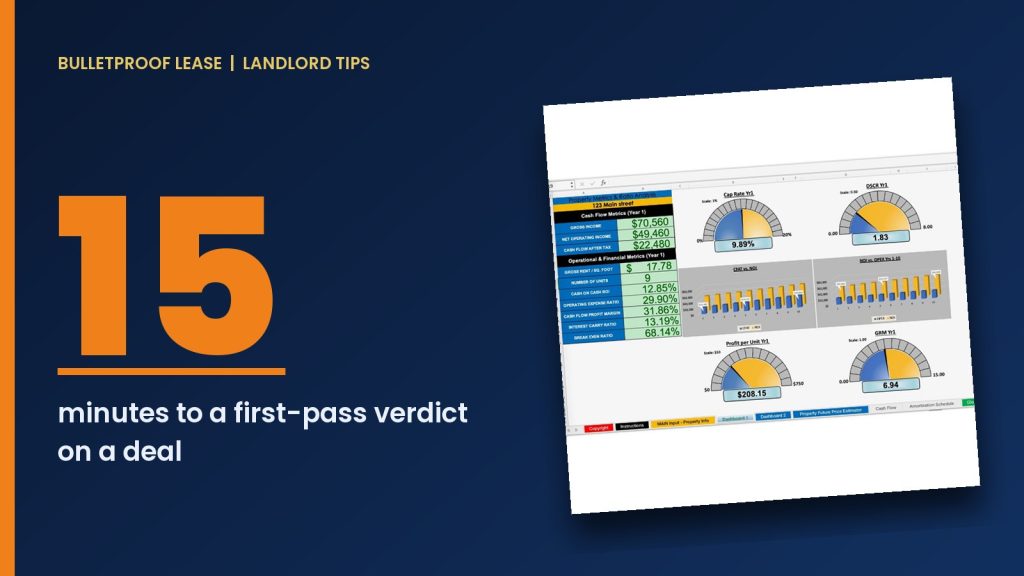
How to Analyze a Multifamily Deal in 15 Minutes
NOI, cap rate, cash-on-cash and DSCR in plain English, with a worked 8-unit example and a seven-step routine you can…